Former
Internee Tells Story of Resistance By
Jason Gewirtz,
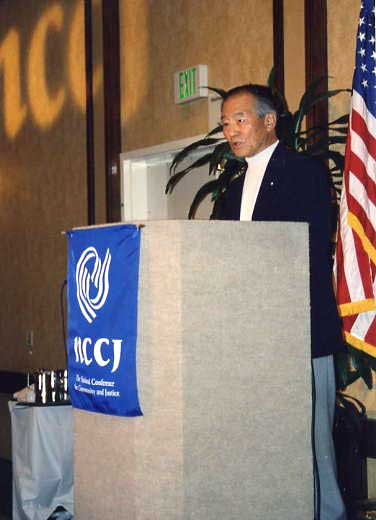
Staff writer Confined to an internment camp for Japanese-Americans during World War II, Frank Emi knows a thing or two about civil rights. Having served 18 months in federal prison for his civil disobedience
at that camp -- an act that history is beginning to recognize -- he knows
even more about taking a stand. Emi's saga began in 1942 with President Franklin D. Roosevelt's signature on Executive Order 9066. The measure forced more than 120,000 Americans of Japanese ancestry into internment camps across the West. A Poly High School graduate, Emi owned a grocery store in Los Angeles at the time he was ordered away. He eventually landed at Heart Mountain in Wyoming.
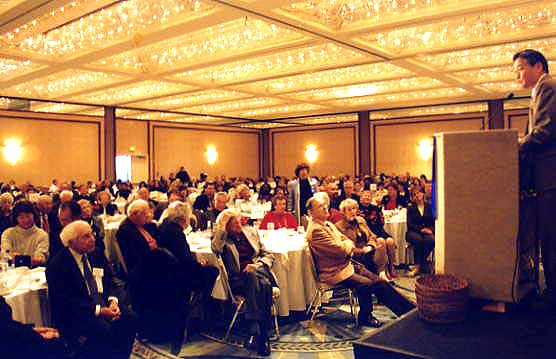
Convinced that their rights as citizens had already been violated by their placement in the camps, 12,000 of those interned either answered “no”' or refused to answer at all. At Heart Mountain, that act of civil disobedience led to the formation of the Heart Mountain Fair Play Committee. The group, led by Emi, drafted a manifesto of their grievances, asking to be treated in accordance to the U.S. Constitution. “We thought that this was not only grossly unfair and wrong, but legally questionable,” he said. Emi and others felt they had legitimate gripes. Emi had invested $25,000 in his grocery operation before the war. Forced to sell quickly after the order to leave, he received $1,500 for the business. After the war, he learned that the business had been sold again for $100,000. At Heart Mountain, 63 draft resisters were arrested and convicted. A group of seven, including Emi, was later indicted for violating the selective service and conspiring to have others do so as well. They were sentenced to between two and four years in federal prison. Emi served his sentence at Leavenworth Prison. The resisters, he said, made the most of their incarceration. They even offered judo demonstrations that won them admiration, and some fear, from other inmates and guards. In December 1945, their convictions were overturned on appeal. President Harry Truman later pardoned the resisters. “I think (it is) a chapter that none of us is proud of,” said Alan Nishio, president of NCCJ's Greater Long Beach Region. It's also a chapter close to Nishio: He was born in an internment camp. Emi said he is concerned about history repeating itself with the USA Patriot Act. The measure, adopted after 9/11, gives the federal government wide-ranging powers to fight terrorism. “The Constitution and the Bill of Rights is alive and well,” he said. “It's the men and women who interpret it that sometimes screw up and lose sight of its ideals, like what's going on now.” After his speech, Emi received a key to the city from Vice Mayor Frank Colonna. “I wish I could have given this to you about 45 years ago,” Colonna said. Copyright © 2004 Press-Telegram Photos courtesy NCCJ See also "Frank Emi Receives the Key to the City" HOME | DOCUMENTS | STUDY CENTER | NEWS | LINKS | ABOUT US | E-MAIL Updated: March 14, 2004 |