Is it possible to lift the burden of inherited shame and intergenerational anger by looking squarely at the source of that trauma?
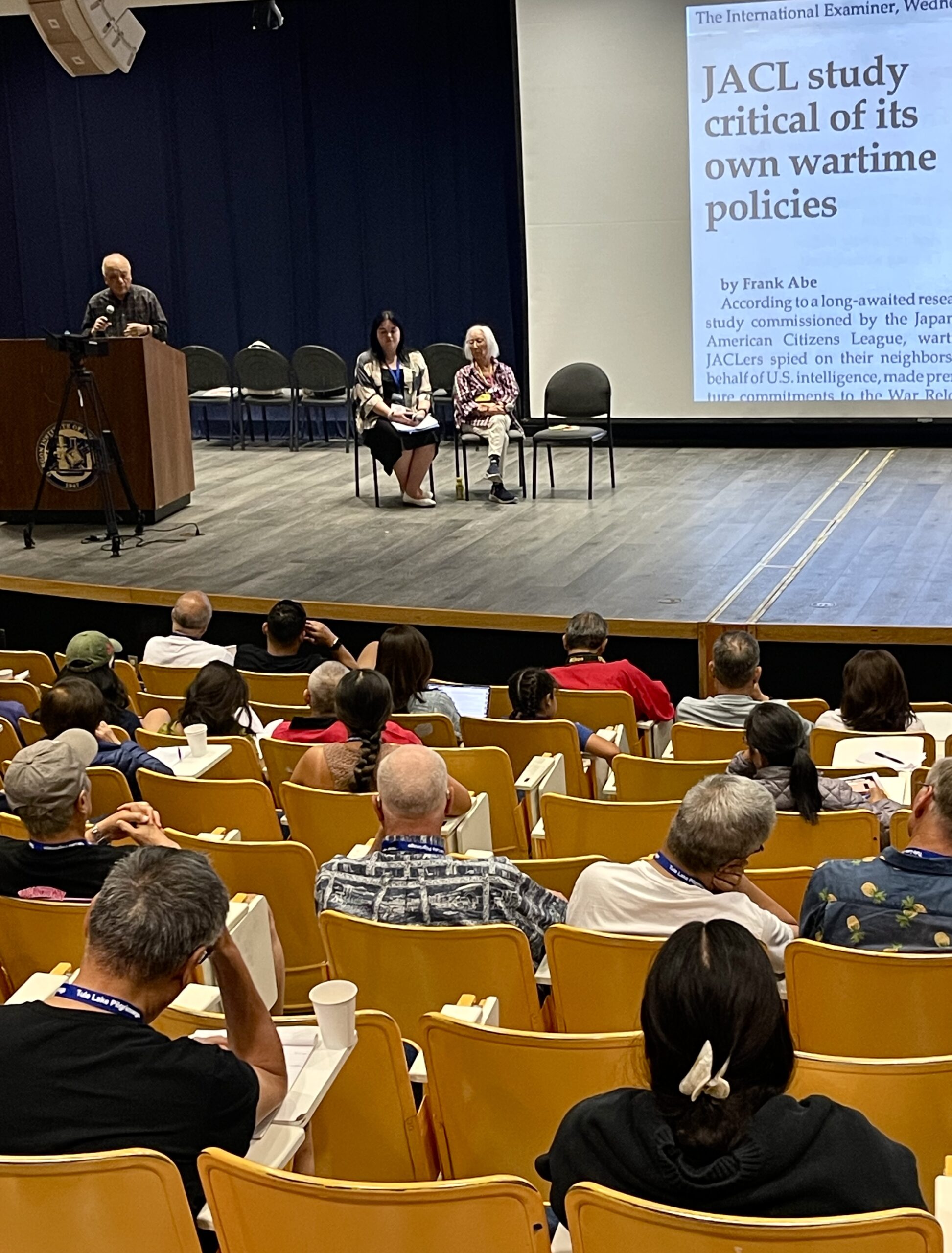
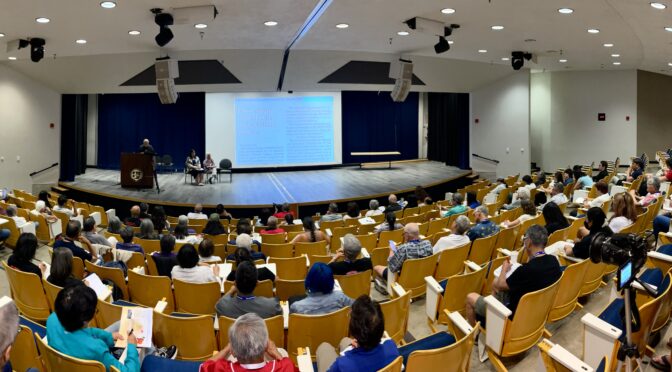
That’s the question we raised at the 2026 Tule Lake Pilgrimage with our July 5 workshop on “‘The Lim Report’ in the 21st century, and what it says to us today.” As described earlier, I recently scanned the original 94-oage paper copy for you to download here and read for yourself.
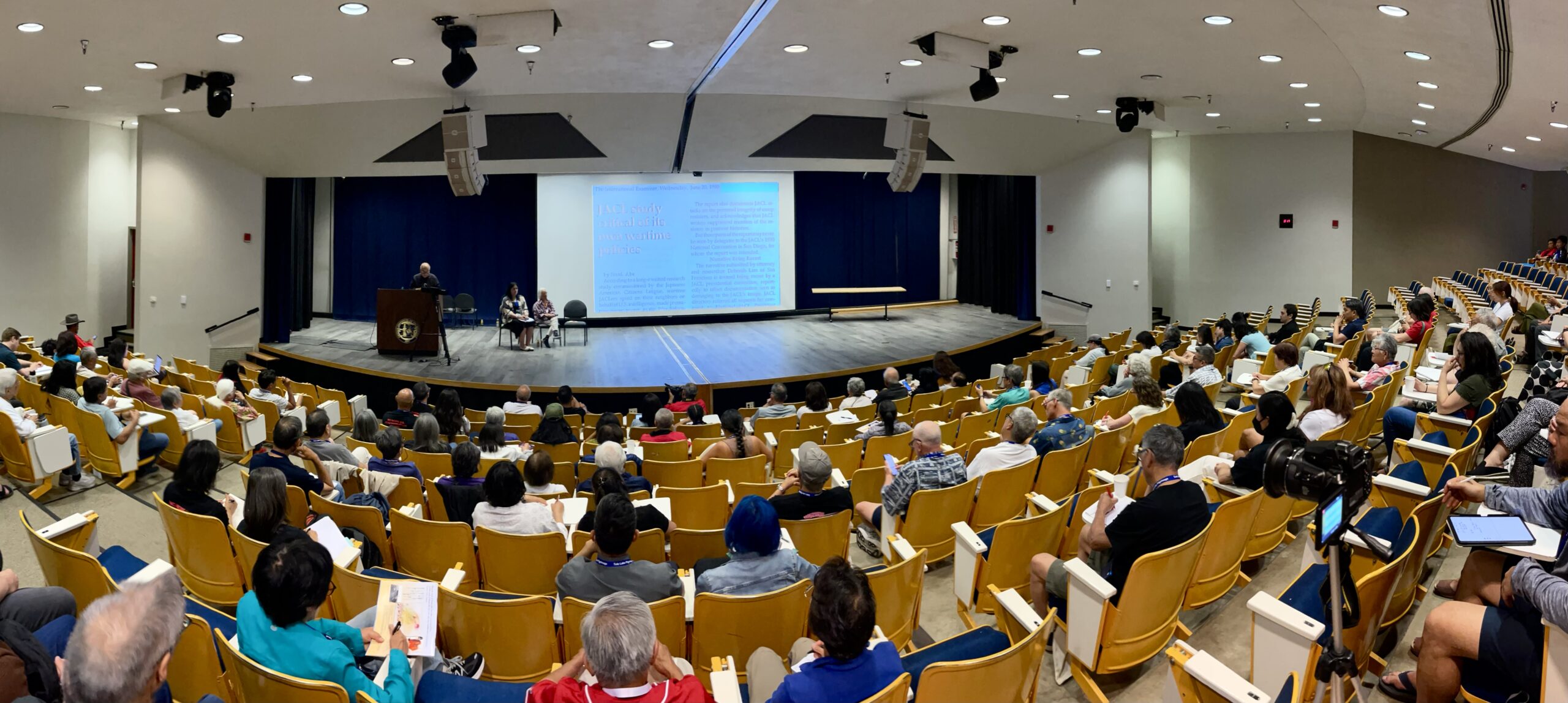
The online version of the 1990 “Research Report Prepared for Presidential Select Committee on JACL Resolution #7,” commissioned by the JACL and popularly known as the Lim Report, has been accessible on this site since 2002, but I was surprised to learn how very few have taken the time to actually read it over the past 36 years. Given that we didn’t have the capacity to print thick copies for each of the roughly 250 in attendance, I read aloud from the key findings:
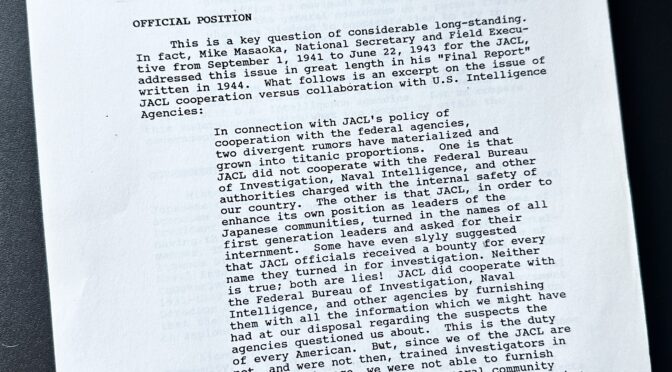
- That key JACL leaders were deeply involved in turning over the names of Issei and Kibei community leaders to the FBI and Office of Naval Intelligence before Pearl Harbor, and informing on dissidents once inside camp, in the belief that by acting as government informants they were being “constructive cooperators for national defense;”
- That at least 8 JACL leaders and 3 emergency defense committees in Los Angeles, San Francisco, and Seattle, were confirmed informants;
- That in an effort to stave off impending evacuation, Mike Masaoka proposed “a volunteer ‘suicide battalion’ which would go anywhere to spearhead the most dangerous missions,” and whose loyalty would be ensured by having the government hold their families and friends as “hostages” — a direct quote from Masaoka’s “Final Report” to the JACL in 1944;
- That Masaoka and two other national officers crossed the line from community advocates to actual employees of the War Relocation Authority, working without pay and title in exchange for freedom of movement — a fact the first WRA director, Milton Eisenhower, confirms in his autobiography; and
- That Masaoka’s offer of JACL “cooperation with and subservience to the WRA” was “particularly disturbing” for effectively compromising JACL’s freedom to act in the best interests of the Japanese American community “when a difference in point of view or priorities arose.”
The section most pertinent to #tulelakepilgrimage2026 comes at 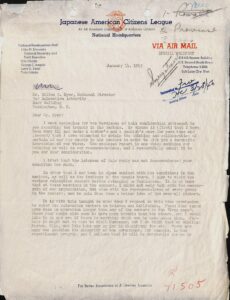 the end of the Research Report, a section headlined “Segregation” that quotes at length from Mike Masaoka’s “Confidential Statement” of January 14, 1943, to new WRA director Dillon Myer. It’s a piece I’ve had online on this site for decades; you can read it in full in this seven-page PDF. This is the memo that Floyd Cheung and I excerpted on pp. 144-145 in our Penguin Classics anthology of The Literature of Japanese American Incarceration as an important piece of camp writing and evidence of the JACL’s role in the government’s creation of the Tule Lake Segregation Center.
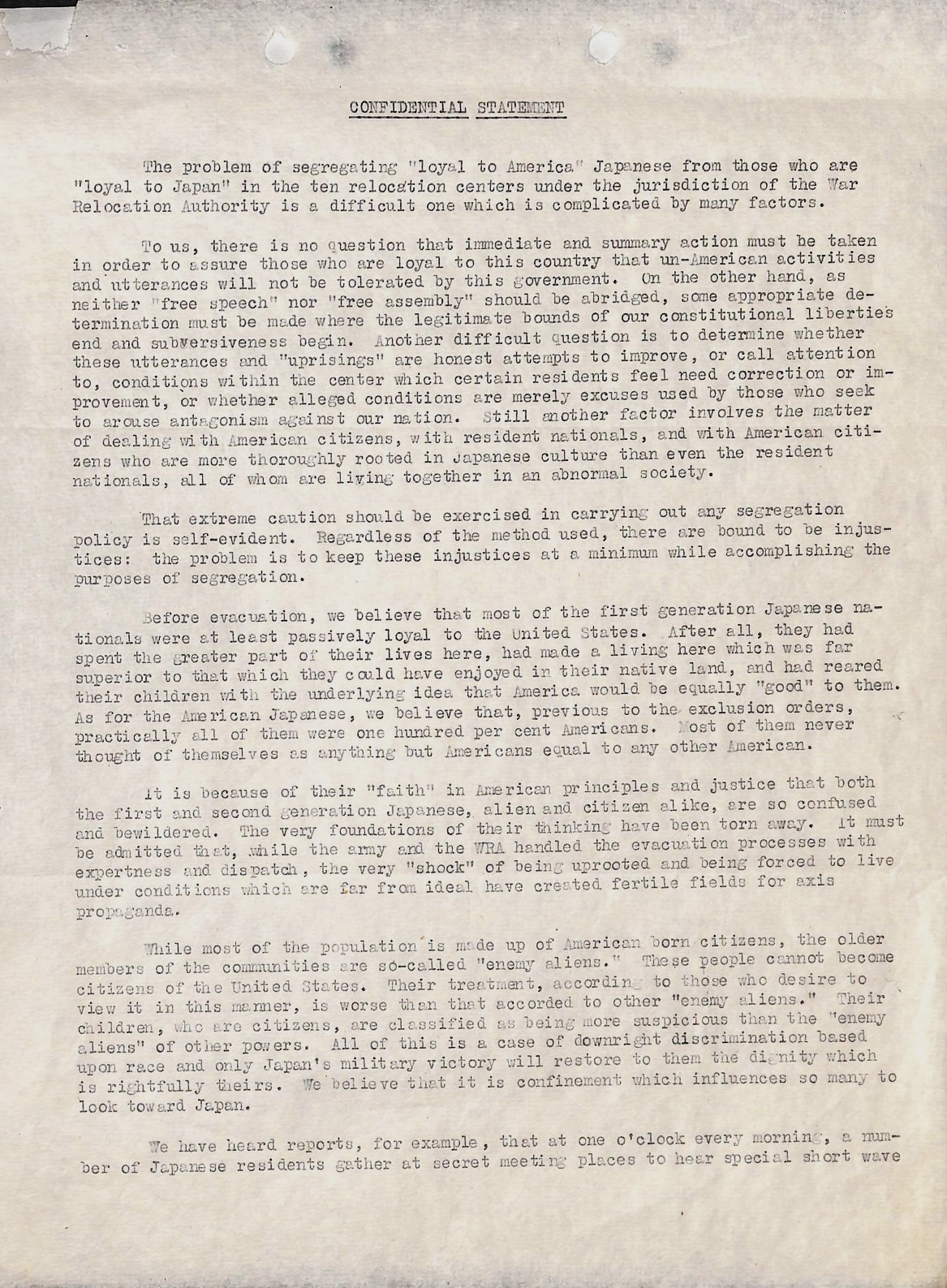 What the Lim Report does is to shine a light on the memo’s recommendations to identify and segregate those who contested their incarceration as well as JACL leadership. Over five pages, Masaoka discusses what he sees as the problem of “segregating ‘loyal to America’ Japanese from those who are ‘loyal to Japan,’” and writes:
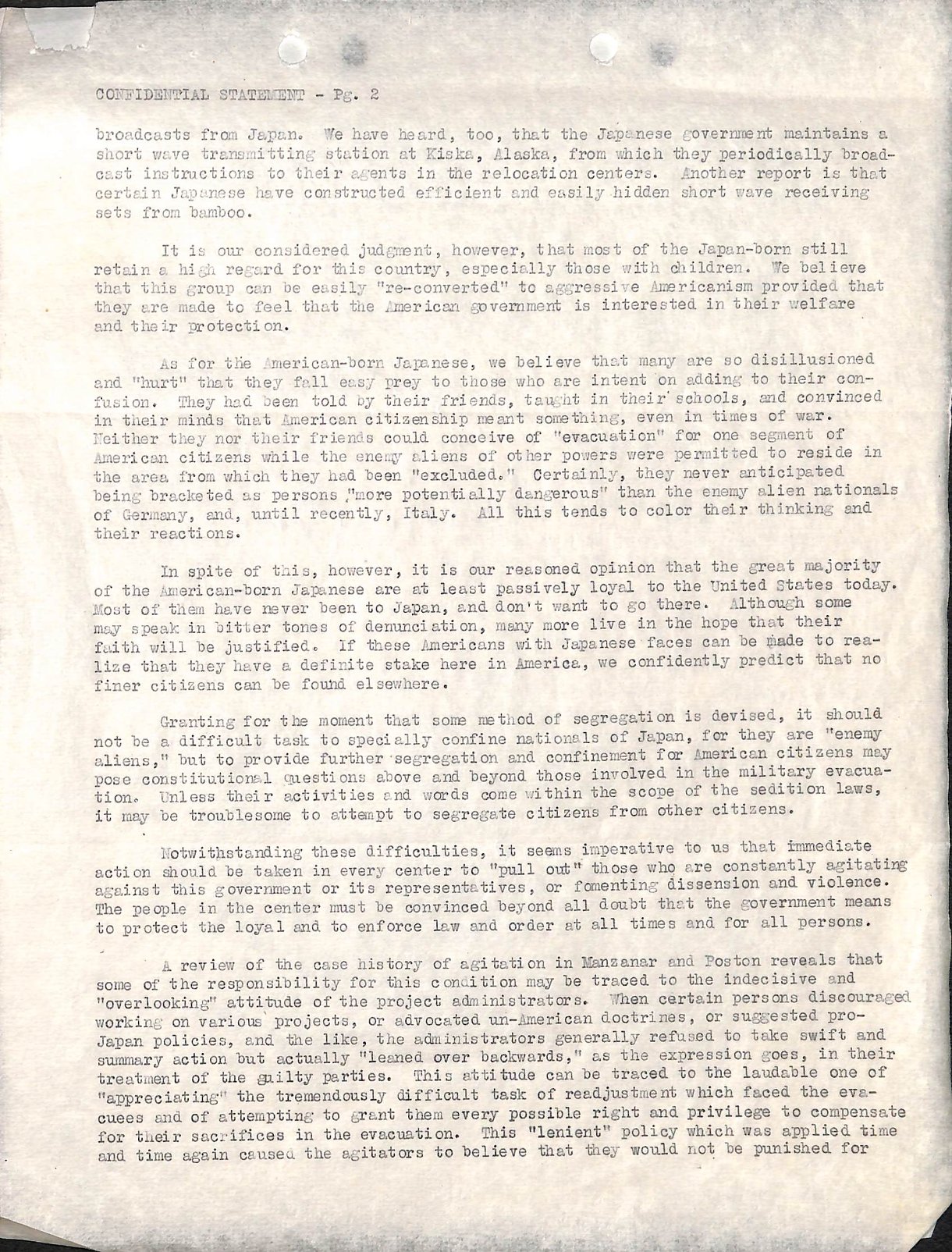 Notwithstanding these difficulties, it seems imperative to us that immediate action should be taken in every center to “pull out” those who are constantly agitating against this government or its representatives, or fomenting dissension and violence. The people in the center must be convinced beyond all doubt that the
  government means to protect the loyal and to enforce law and order at all times and for all persons.286
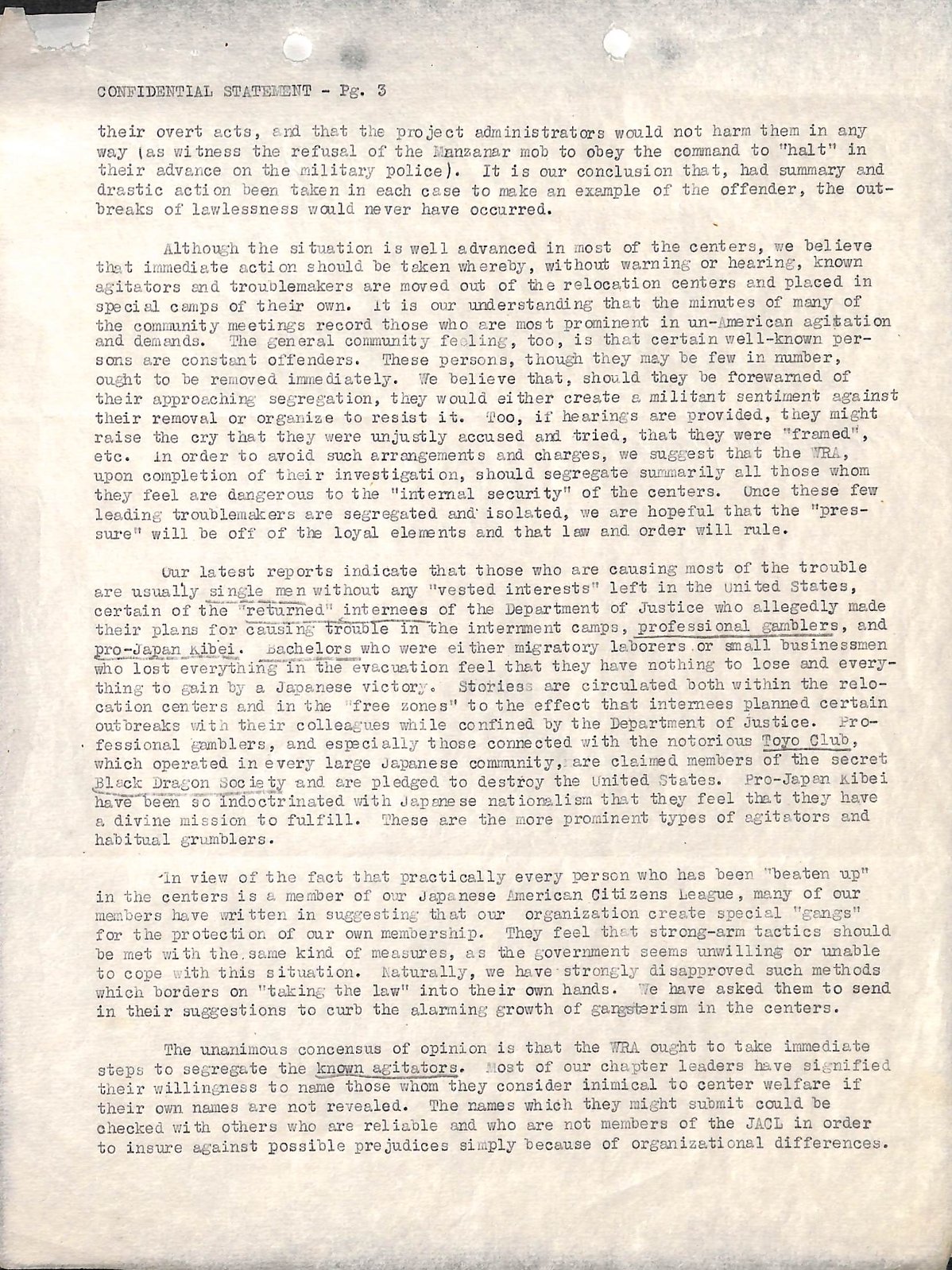
 Immediate action should be taken whereby, without warning or hearing, known agitators and troublemakers are moved out of the relocation centers and placed in special camps of their own. . . . We believe that, should they be forewarned of their approaching segregation, they would either create a militant sentiment against their removal or organize to resist it.
 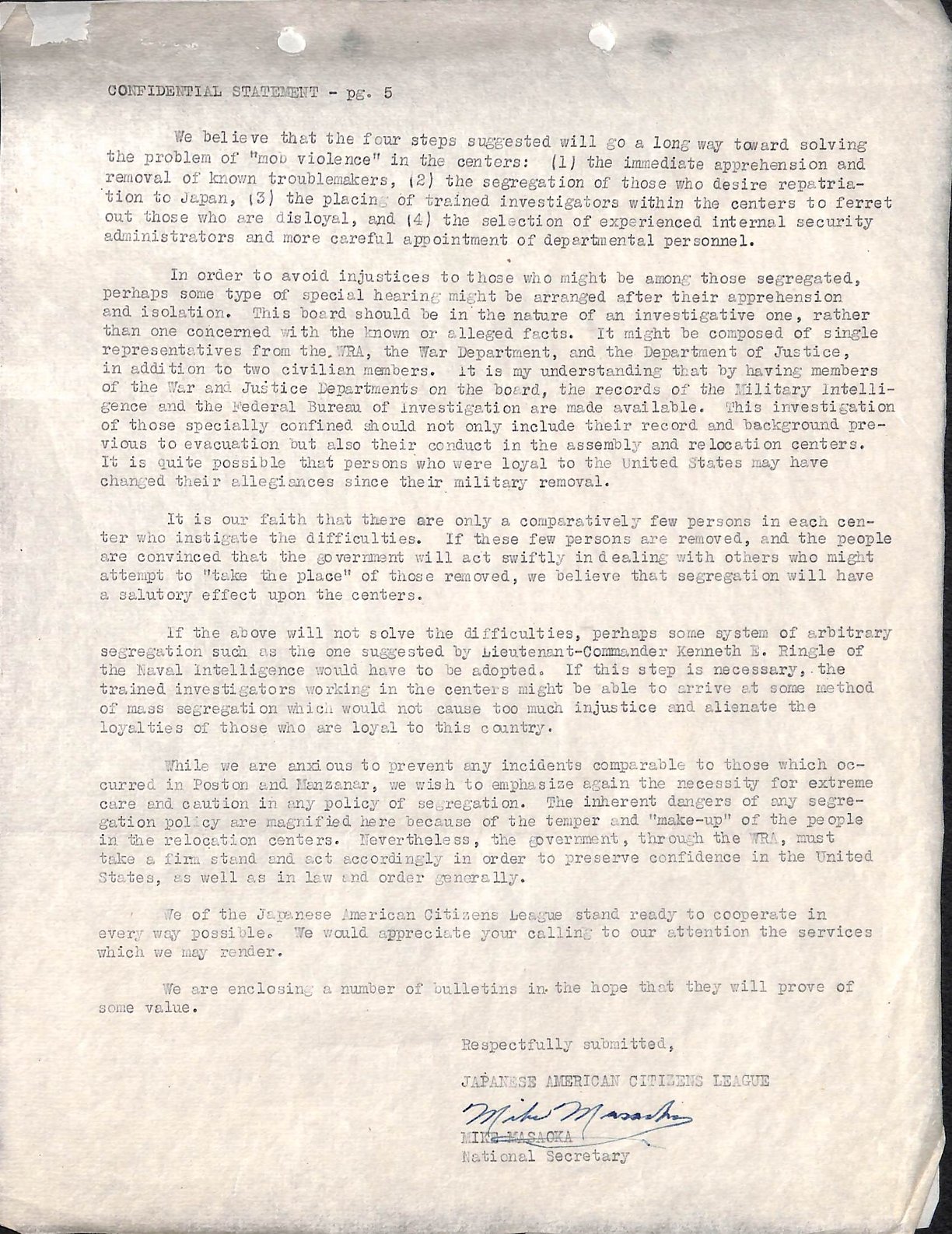 Too, if hearings are provided, they might raise the cry that they were unjustly accused and tried, that they were “framed,” etc. In order to avoid such arrangements and charges, we suggest that the WRA, upon completion of their investigation, should segregate, summarily all those whom they feel are dangerous to internal security.287
Remember, Masaoka is writing this two weeks before the Army and WRA hand down the paper questionnaire demanding an oath of loyalty to the government that destroyed lives and livelihoods, well before creation of the Segregation Center, so the “agitators and troublemakers” he’s referring are not no-no’s or renunciants. He’s talking about Japanese Americans acting out against JACL leadership. And Masaoka pledged the cooperation of JACL leaders in camp to identify candidates for segregation:
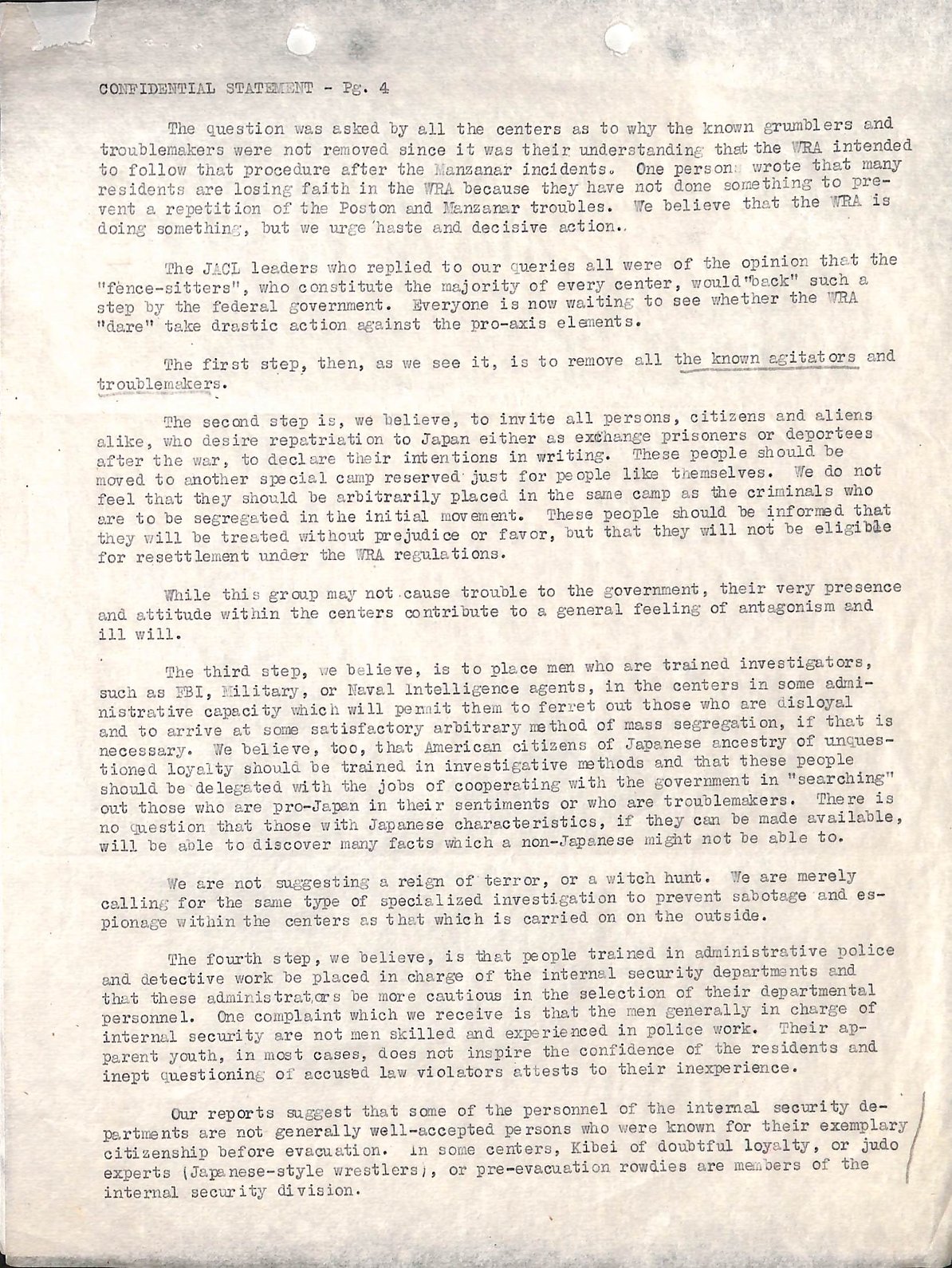
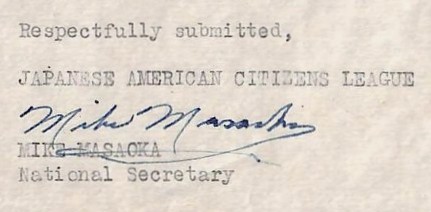 Most of our chapter leaders have signified their willingness to name those whom they consider inimical to center welfare, if their own names are not revealed. The names which they might submit could be checked with others who are reliable and are not members of the JACL in order to insure against possible prejudices simply because of organizational differences.290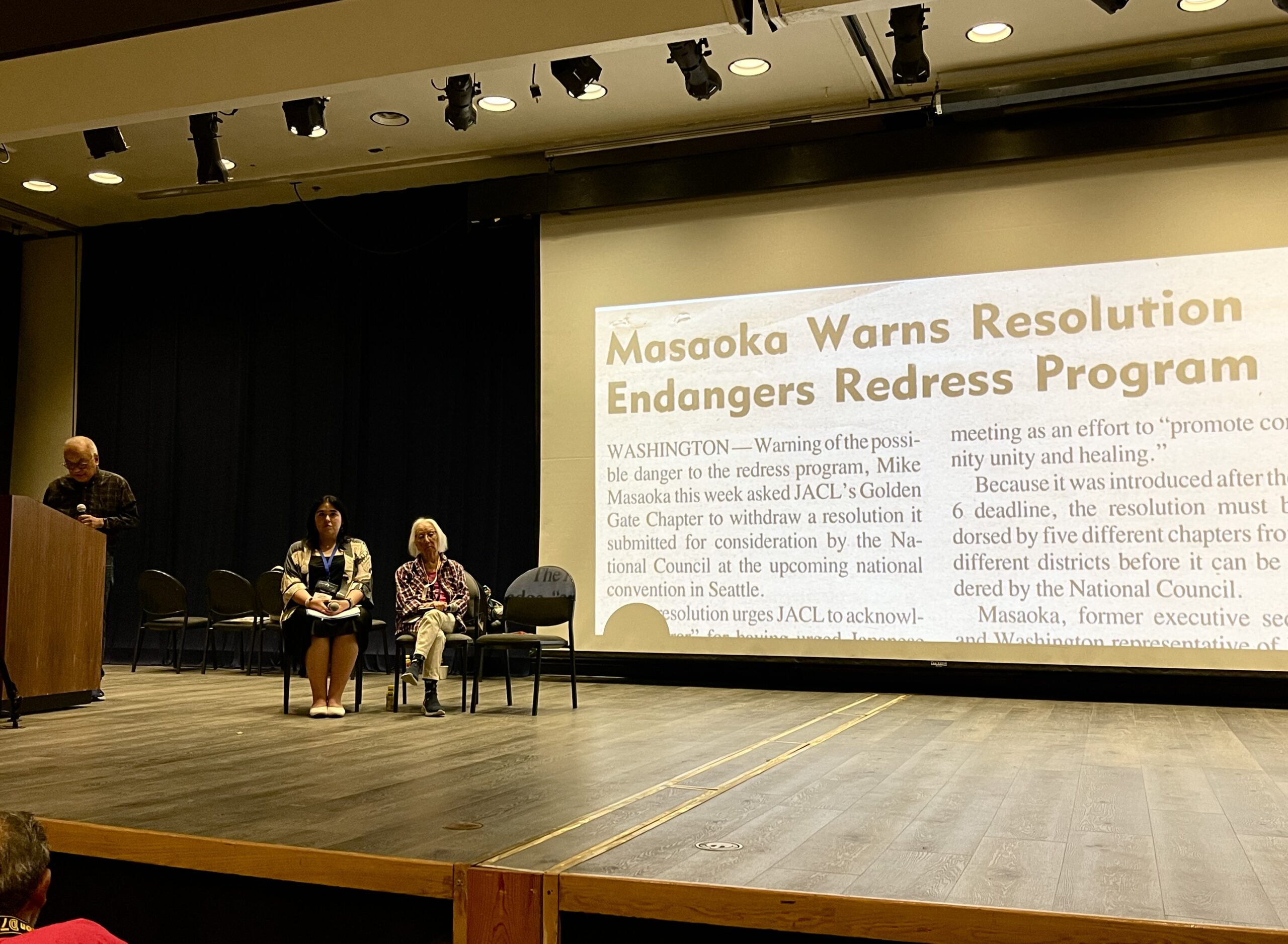
“Their kind.” I shuddered as I read those words aloud at the Tule Lake workshop. That’s where the division and demonization of the “other” started. I could viscerally feel the distaste and distance that wartime JACL leaders put between themselves and other incarcerated Japanese Americans who refused to fall in line and become what panelist Chizu Omori called “Better Americans in a Greater America, the model minority.”
So what does this all mean? The Lim Report is at heart an assembly of all the material on the subject of the JACL’s wartime policies and actions, and when you line everything up the story is undeniable — that for its own reasons, the wartime JACL promoted the identification and segregation of fellow Japanese Americans who contested their unjust incarceration as well as the collaboration taking place in their name between the government and JACL. The JACL’s recommendations led in a straight line to the WRA’s creation of the Tule Lake Segregation Center, making JACL arguably responsible in part for the division, violence, and family anguish that followed.
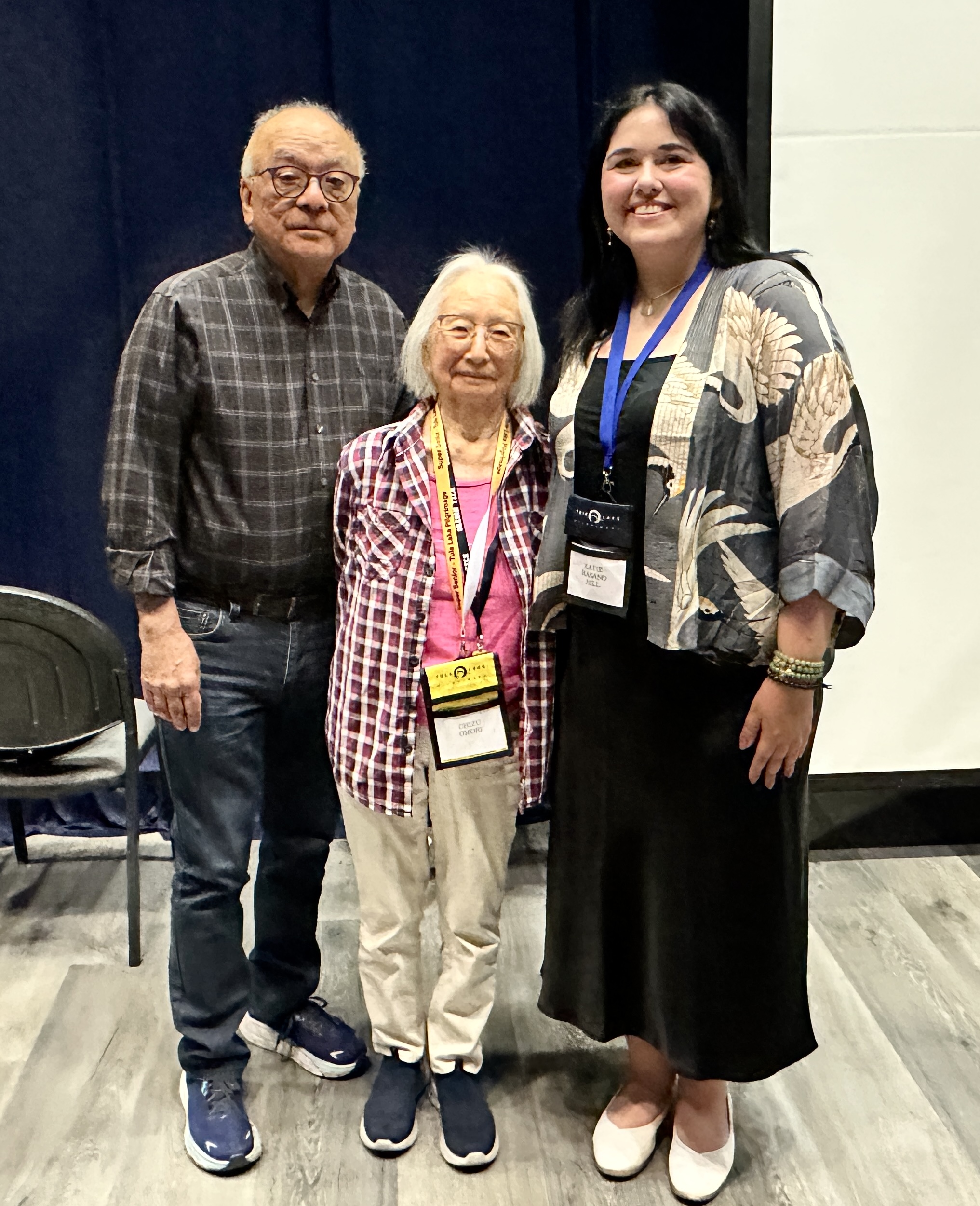
One such family story was shared by JACL Norman Y. Mineta Policy Fellow Katie Masano Hill, whose great-great-grandfather was segregated to Tule Lake, and whose great-uncle Yoshimichi Nakatsuka, after less than a month at Tule Lake, was diagnosed with catatonic schizophrenia and sent to Napa State Hospital, where he was forcibly lobotomized at least twice and died in December 1944 at twenty-four years old — which is how old Katie is now. She was moved by visiting the remains of Block73 where Yoshi and her other ancestors were once held.
Hill credited the Kansha Project at Chicago JACL with helping her uncover the story of her great-uncle in the archives and heal with her family. “I think what brings me to the Lim Report today is the piece about letting it all air out and letting it all be known,” she said, “because I think we can’t start the healing process when we’re still debating the facts of what happened.”
When asked to say what it means to her to inherit both the strengths and shortcomings of an institution, she spoke only for herself as a Gosei and a Tule Lake descendant in replying, “I think it’s really difficult to hear, but I’m grateful that the truth has been coming out and resurfacing.”
“I think this opportunity allows us to heal and have these difficult and deep conversations with one another about how do we go forward and how do we think ahead? This spun out of the 80th anniversary [of the closing of Tule Lake] and in twenty years it’s going to be the 100th anniversary, and how do we heal when there’s still amongst ourselves a disconnect about who did what and how entities were involved,” she said.
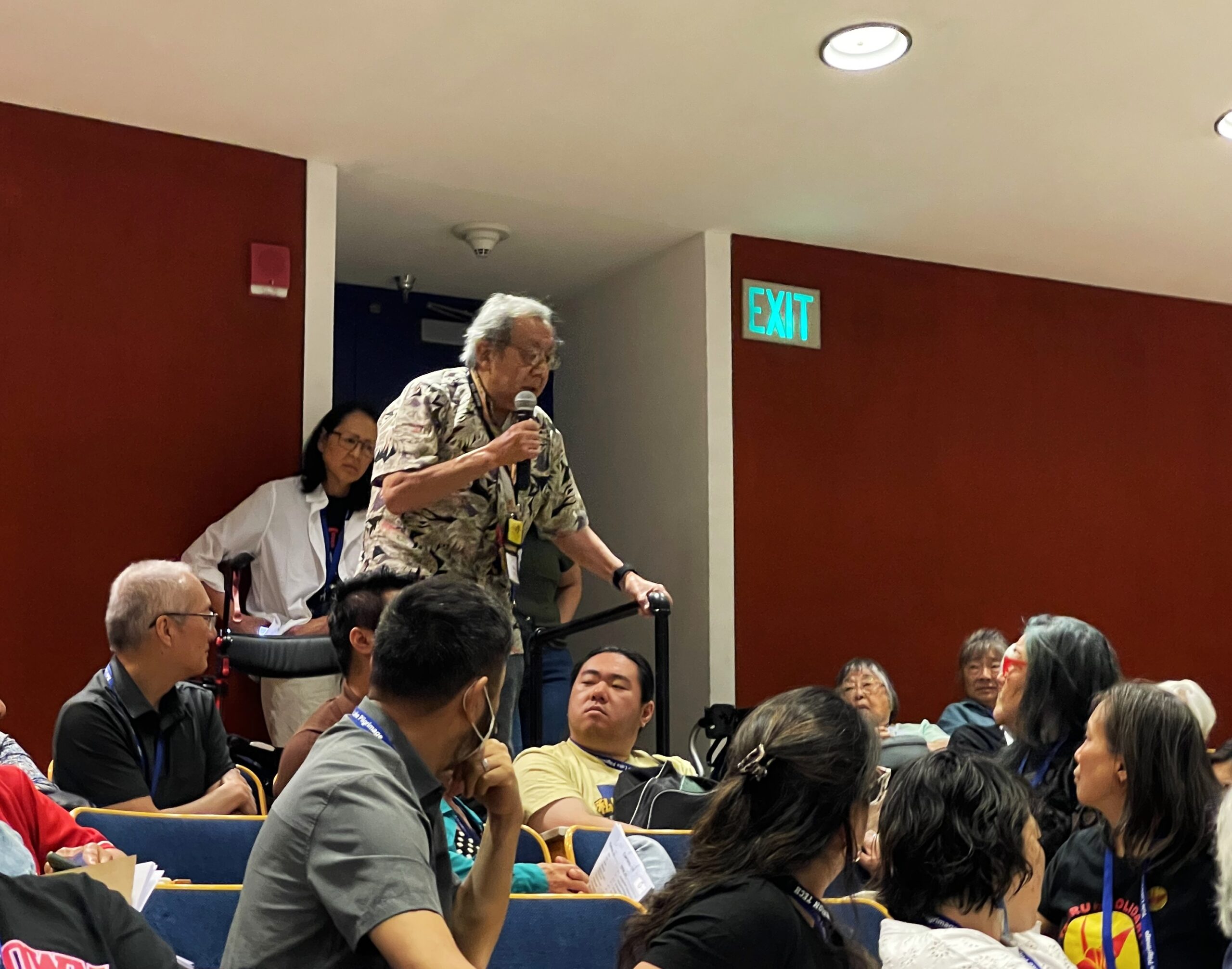
In the audience Q and A that followed, Herb Yamanishi, who was JACL National Director from 1996 to 1999, rose to say, “Since I’ve been here, I feel a little bit of a negative undercurrent about JACL … and yet I thought we were here as part of a healing process as a community.” To that, Barbara Takei of the Tule Lake Committee rose to suggest that “the frustration of what you’re sensing” stemmed from the lingering resentment among Tulean families at the organization’s backhanded 2019 apology to the Tule Lake resisters, which included language that condemned dissent and created additional harm, pain, anger, and distrust.
Whenever JACL does try to move forward, as it did in 2019, the move is often derailed 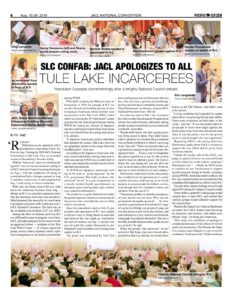 by someone raising the specter of JACL leaders being beaten up in camp by some combination of protesters or resisters or “extremist elements” or “no-no boys.” As shown above, the two documented attacks on JACL leaders in camp occurred in late 1942, before the loyalty questionnaire, before the creation of “no-nos.” Tule Lake had nothing to do with those beatings.
Whenever people talk about reconciliation within the Japanese American community, it’s often framed as reconciliation between two opposing camps, between JACL and the “no-no boys,” or between JACL and the Tule Lake renunciants and their descendants. But in observing the organization’s internal struggles over the past 40 years to make some meaningful atonement for the actions of its wartime leadership, I’ve come to believe the reconciliation that needs to happen is within the modern-day JACL itself — for the organization to reconcile itself with its own history, before it can be free to reconcile with anyone else.
In that regard, our workshop at Tule Lake opened a path for JACL to address its problem of a flagging membership and engage the next generations it so urgently needs to survive — by coming clean, acknowledging its history, and repudiating the worst of its wartime excesses, much like the U.S. government did in apologizing and making reparation. The people who made those wartime decisions are long gone, along with most of their staunchest defenders. The study of the wartime JACL will soon be as distant to us in the present as the study of the Civil War was when I was growing up. The organization is on the cusp of yet another generational turnover. Why keep lugging the old baggage?
 I’m hearing things coming out of the workshop and pilgrimage that may be brought before the next JACL convention starting July 29 in Las Vegas. New leadership could come in the form of resolutions formally embracing the findings of the 1990 Lim Report; adopting the language of the March 30 JACL statement essentially apologizing for its backhanded 2019 apology to the Tule Lake resisters; or going all the way and apologizing to the entire community for its wartime collaboration and suppression of resistance, as Frank Emi suggested — with the memorable quote used for the title of this post — at the JACL’s 2002 public apology to the “Resisters of Conscience.”